Kaisora Guggulu klasična je ajurvedska formula koja spaja Guduchi, jednu od najcjenjenijih penjačica u tradiciji, s Gugguluom, pročišćenom smolom po kojoj cijela porodica pripravaka nosi ime. Rezultat je valjana tableta iza koje stoje stoljeća ljekarničke prakse. Ovaj vodič objašnjava što klasični tekstovi opisuju u formuli, odakle dolazi ime, kako djeluje oblik Vati i kako se Kaisora Guggulu smješta u širu porodicu Guggulua koju Art of Vedas nosi u asortimanu.
Što je Kaisora Guggulu
Ime nudi malen komad poezije. Kaisora upućuje na mladenaštvo, razdoblje života između djetinjstva i odrasle dobi, a klasični su autori tu riječ pripojili formuli izgrađenoj oko Guduchija, biljke koju sama tradicija naziva Amrita, neprolazna. Formula je opisana u klasičnim zbornicima pripravaka, gdje pripada skupini u kojoj se bilje umiješa u pročišćenu smolu Guggulu i uvalja u tablete. I danas ostaje jedan od najšire pripravljanih klasika s Guggulom u južnoindijskim ljekarnama.
Sastav onako kako ga opisuju tekstovi
Klasični opisi formulu grade na tri stupa. Prvi je Guduchi, botanički Tinospora cordifolia, pripravljen izdašno i kao dekokt i kao prah; priču o toj izvanrednoj penjačici donosi naša monografija o Guduchiju u ajurvedi. Drugi je trojac Triphale, Amalaki, Bibhitaki i Haritaki. Treći je sama pročišćena smola Guggulu, koja masu povezuje u obradivu podlogu za tablete. Oko tih stupova tekstovi navode grijuće i prateće bilje, klasično ljuti trojac suhoga đumbira, crnoga papra i Pippalija, uz Vidangu i male mjere daljnjega bilja. Kao i uvijek, mjerodavan popis sastava jest deklaracija proizvoda koji kupujete.
Tradicionalni kontekst
Unutar klasične prakse Kaisora Guggulu nosi dugotrajnu vezu s kožom i s postojanim, ugodnim kretanjem. Suzdržano rečeno, tradicija bilježi da je formula:
- Tradicionalno u ajurvedi upotrebljavana kao dio rutina vezanih uz čistu, ugodnu kožu
- Klasično povezana s glasom Guduchija kao Rasayane u literaturi o pripravcima
- Tradicionalno uzimana u obliku tablete, kako bi obroci ostali jednaki iz dana u dan
- Uobičajeno praćena toplom vodom i nežurnim dnevnim ritmom
Riječ je o iskazima tradicionalne upotrebe zabilježenima u klasičnoj literaturi, a ne o tvrdnjama o ishodima.
Oblici dostupni u Art of Vedas
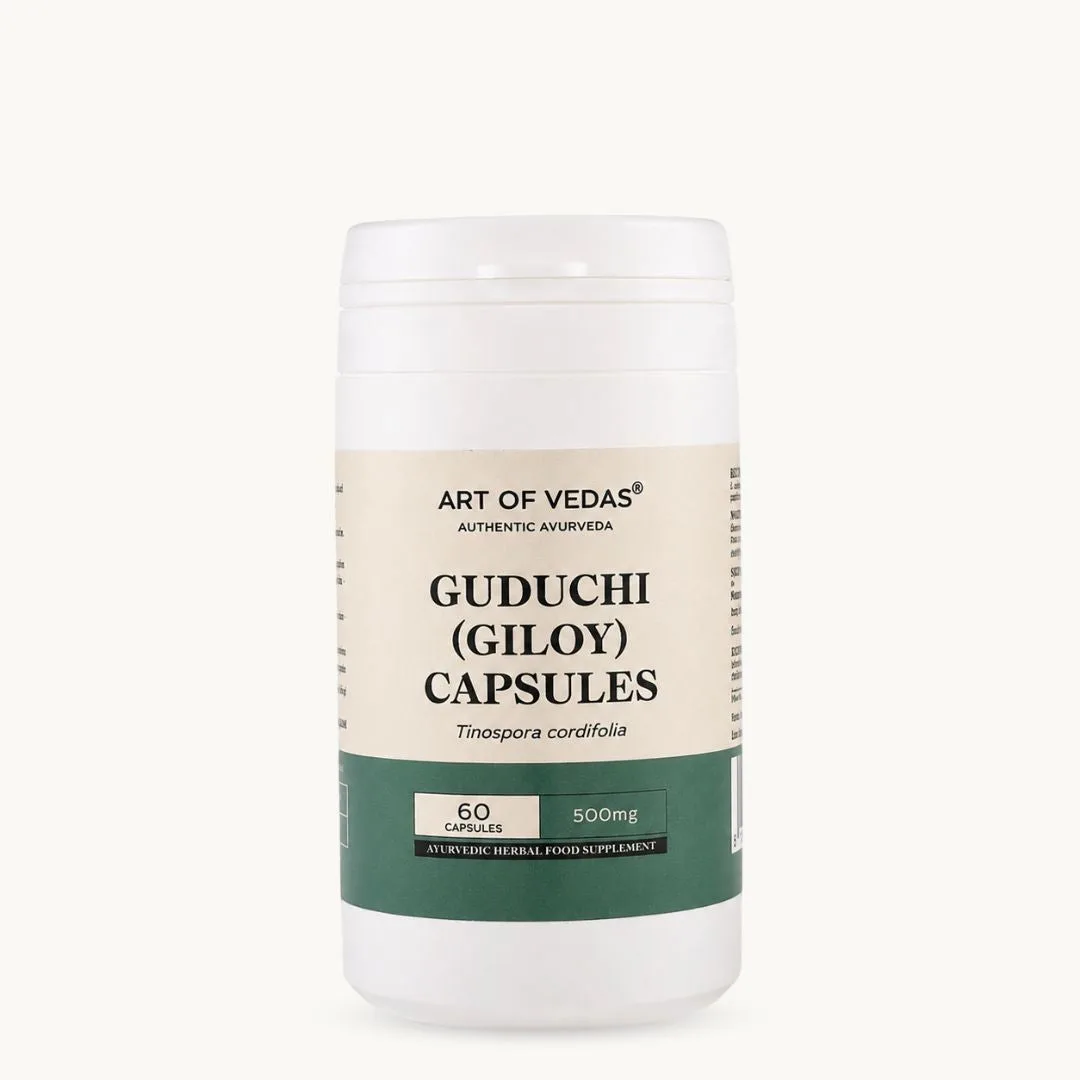
Formulu držimo od klasičnih proizvođača u dva izdanja: Kaisora Guggulu Vati u pakiranju od 120 tableta i Kaishora Guggulu u standardnom formatu njezina proizvođača. Zapis se koleba između Kaisora i Kaishora, ovisno o transliteraciji koju pojedina ljekarna preferira; klasična formula iza tih imena ista je. One koje privlači sama glavna biljka mogu razmotriti i Guduchi kapsule.
Porodica Guggulua
Kaisora Guggulu jedna je od nekoliko klasičnih formula na podlozi smole, a svaku određuje bilje umiješano u podlogu Guggulua. Među bliske srodnike spadaju Yogaraj Guggulu, biljem bogati „kralj pripravaka”, i Lakshadi Guggulu, izgrađen oko Lakshe. Čitanje triju vodiča zajedno daje jasnu sliku o tome kako jedna smola nosi mnoge različite klasične recepte.
Često postavljana pitanja
Što je Kaisora Guggulu?
Klasična je ajurvedska formula u obliku tablete, u kojoj se Guduchi, Triphala i prateće bilje umiješaju u pročišćenu smolu Guggulu, kako to opisuju klasični zbornici pripravaka.
Što ime znači?
Kaisora na sanskrtu upućuje na mladenaštvo, a Guggulu imenuje pročišćenu smolnu podlogu. Ime bilježi poštovanje klasičnih autora prema glavnoj biljci formule, Guduchiju.
Jesu li Kaisora i Kaishora Guggulu različite formule?
Nisu. Riječ je o dvjema transliteracijama istoga sanskrtskog imena, a različite ih ljekarne jednostavno drukčije zapisuju latinicom.
Za što se Kaisora Guggulu tradicionalno upotrebljava?
Klasična ga literatura vezuje uz rutine za ugodnu kožu i postojano kretanje. To su zapisi tradicionalne upotrebe, a ne tvrdnje o učinku; držite se deklaracije i savjeta svojega praktičara.
Kako se tradicionalno uzima?
Kao tablete s toplom vodom, u količini navedenoj na deklaraciji proizvoda. Kvalificirani ajurvedski praktičar može savjetovati pristaje li formula vašoj rutini.
Koja biljka vodi formulu?
Guduchi, botanički Tinospora cordifolia, pripravljen klasičnom metodom i kao dekokt i kao prah.
Proizvodi spomenuti u ovome članku dodatci su prehrani ili tradicionalni ajurvedski pripravci. Dodatci prehrani nisu nadomjestak ni zamjena za raznovrsnu i uravnoteženu prehranu i zdrav način života te nisu namijenjeni dijagnosticiranju, liječenju ni sprječavanju bilo koje bolesti. Uvijek se držite uputa i preporučene dnevne količine navedenih na deklaraciji proizvoda te se posavjetujte s kvalificiranim ajurvedskim praktičarom ili zdravstvenim stručnjakom ako ste trudni, dojite, uzimate lijekove ili imate postojeće zdravstveno stanje.